

2026 SLCE Conference Schedule
Conference Keynote
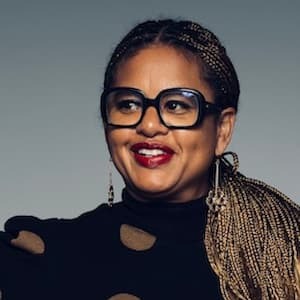
We are honored to welcome, as our featured speaker for the 2026 SLCE Conference, Dr. Natalie Hopkinson(opens in new tab)(opens in new tab), Associate Professor of Media, Democracy and Society at American University. Author of three books and hundreds of journalistic and academic works on Black and Indigenous art, media, and knowledge systems, she served as Chief Curator of the Go-Go Museum & Cafe, whose 2025 grand opening in Historic Anacostia culminated decades of her journalism, scholarship, and advocacy.
As co-founder of the Don't Mute DC movement, she helped shape the D.C. law that decriminalized go-go music and designated it the Official Music of Washington, D.C. She also revived Traditional Arts DC, the city's folklife research program, and has served as co-lead scholar and curatorial consultant to the National Civil Rights Museum at the Lorraine Motel in Memphis, TN. Her talk will bring her decades of work at the intersection of community, culture, and civic power to this year's theme of collaborative community partnerships.
Mary Graydon Student Center
8:00 AM - 9:00 AM | Conference Check-in, MGSC 126 Lounge and Reception Area
9:00 AM - Conference Opening - MGSC 128 Eagle Summit Room
- Welcome
- Dr. Vicky Wilkins, Provost, American University
- Ms. Madeline Yates, Executive Director, Transform Mid-Atlantic
- Keynote - Opening Address - Dr. Natalie Hopkinson(opens in new tab)(opens in new tab), Associate Professor of Media, Democracy and Society at American University.
10:00 AM – 11:10 AM – Session Block 1
Intended Audience: All
The Role of Social Capital in Community Partnerships: Revisiting Robert Putnam
Robert Putnam’s Bowling Alone (2000) describes the dissolution of traditional social structures in the latter part of the 20th century, symbolized by the decline in bowling leagues. In 2003, he wrote Better Together: Restoring the American Community, which illustrates strategies for reversing this trend through the building of social capital: social networks based on trust and mutual assistance. Then, in 2020, he wrote The Upswing, which places our current situation in historical context, and presents a cautiously optimistic view of the future based on changes we have seen before. Participants will share their own strategies for increasing social capital, and for addressing the challenges raised in Putnam’s books.
Presenters
 Alan Penczek – Former Director of Service-Learning & Retired Philosophy Faculty, Stevenson University
Alan taught philosophy at Stevenson University, where he also served as Director of Service-Learning. Though he retired from teaching, he remains active in philosophy and service-learning conferences. His scholarly interests include the philosophy of John Dewey and its influence on American education.
Intended Audience: All (with community partners noted as playing a key role in shaping student training needs)
Supervising more than 250 students through George Washington University's engageDC and SMARTDC programs revealed a training need that went beyond monthly community meetings — students worked with diverse populations across more than a dozen sites, and their training needs varied widely. That gap led to the first Community-Engaged Leadership Symposium in October 2025, with the second iteration reshaped around a student-led planning committee that opened new opportunities for leadership development through co-creation.
The April 2026 symposium grew to thirty sessions covering topics like trauma-informed community service, career pathways in public service, and youth bullying prevention, alongside a block of direct service including work at the GroW Garden and care-kit packing for Miriam's Kitchen — drawing student, staff, faculty, and outside-organization presenters alike. This workshop gives attendees a framework to co-create their own low-cost, student-led conference: presenters will facilitate a resource assessment to identify assets, capacities, and capabilities, and a needs assessment to pinpoint service and training gaps, helping participants leave with a conference outline tailored to their own institution.
Presenters
 Lindsay A. Chudzik – Associate Director, Center for Leadership & Community Engagement, American University
Lindsay has been a community-engaged professor and practitioner for over 15 years. Her debut novel The Most Cake is forthcoming from Wildling Press, and her short stories and essays have appeared in several literary journals. She was founder and Editor-in-Chief of Feels Blind Literary, serves as a peer editor for the Journal for the Study of Cooperative and Experiential Education, and is the recipient of several awards for excellence in community-engaged teaching, leadership, and mentorship.
 Ruby Leonard – Student Chair, Community-Engaged Leadership Symposium; Student Site Leader for engageDC (Latin American Community Center), The George Washington University
Ruby is a rising senior majoring in Human Services and Social Justice with double minors in Spanish and Chinese. She served for three years as a Site Leader for FLOC through SMARTDC and will serve as Site Leader for the Latin American Community Center in her senior year. Ruby is a GW Upstart grant recipient, a Luther Rice fellow, and a Julian Clement Chase Prize for Community Impact winner for her work on reducing fast-fashion consumption through a youth upcycling program at the Latin American Youth Center.
Target Audience: Combination
This workshop guides attendees through identifying programs that could benefit from more intentional partnership practices while exploring strategies that strengthen collaboration, student programming, and sustainability. Participants will become familiar with Towson University's Office for Social Impact's partnership process for determining programmatic fit and alignment between the university and community partners, and will learn a practical framework for community partnership assessment that helps evaluate current relationships, identify opportunities for growth, and align efforts around common goals.
By examining a current or emerging program within their own office, attendees will reflect on how intentional partnership practices can enhance program effectiveness. Participants will leave with actionable ideas, assessment tools, and a clearer understanding of how to cultivate effective community partnerships that advance meaningful social impact.
Presenters
 Shannon Cheek – Assistant Director for Community Impact, Towson University
Shannon is responsible for supporting students' active participation in civic life through the implementation of community engagement programs and cohort experiences on campus and beyond, including training student leaders and developing and maintaining relationships with TU departments, local nonprofit organizations, and community leaders. She received a B.S. in Social Work from the University of Maryland, Baltimore County and a Master of Social Work from the University of Maryland, Baltimore.
Co-Presenter
 Sha-Nel Henderson – Coordinator for Student Community Engagement, Towson University
Sha-Nel supports students’ active participation in civic life through the implementation of community engagement programs on campus and in the broader community. She trains student leaders and cultivates partnerships with TU departments, local nonprofit organizations, and community leaders. Sha-Nel holds a B.A. in Communication Studies from Indiana University, Purdue University Indianapolis and an M.F.A. in Theatre from Towson University.
Intended Audience: Combination
This roundtable explores how service-learning initiatives can create sustainable impact in culturally diverse communities — examining how to enter unfamiliar contexts, both locally and globally, with humility, build trust across differences, and design initiatives around community voices to create long-term sustainable change even through short-term engagements.
Presenters will share their experience leading an 11-week service-learning project in Cape Town, South Africa, through which they conducted sexual health workshops with 300+ high school students in Langa township, strengthened medical resource capacity at two clinics, and supported outreach events for local holidays, engaging stakeholders ranging from community health workers and parents to Department of Health officials and community chiefs. The project's success depended on adapting and integrating initiatives with local community practices so the work could continue beyond the presenters' time in South Africa — the workshop model they developed continues to be used in other townships near Cape Town today.
To maximize participation, social challenge posters focused on themes like health access, youth education, and environmental sustainability will be placed around the room, with participants rotating between them to respond to guided prompts, building toward a shared reflection on what ethical, sustainable community-based engagement requires.
Presenters
 Arushi Sharma – Undergraduate Student (Senior), Johns Hopkins University
Arushi is a current undergraduate student studying Public Health and Natural Sciences at Johns Hopkins University. During her time at Hopkins, she studied abroad in Cape Town, South Africa, in Summer 2024 and worked with a community healthcare organization, Kheth'Impilo. She returned to Cape Town in the summer of 2025 to continue working with this organization on a grant-funded project focused on sexual health education among high schoolers in the Langa township. In the future, Arushi plans on attending medical school and working in the international healthcare field.
 Will Taggart – Master's of Science in Public Health Candidate, International Health Department, Johns Hopkins Bloomberg School of Public Health
Will first became interested in public health when he worked on smoking cessation projects in high school. In college, he attended Johns Hopkins University, where he studied Public Health and studied abroad in Cape Town, South Africa. His work with the community healthcare organization Kheth'Impilo led him to return to the country the next year to work on a project focused on youth sexual health education in the Langa township. Will plans on attending medical school in the future and practicing in the international healthcare field.
Intended Audience: Combination
Colleges and universities are sometimes perceived as heavily research-oriented, particularly when it comes to engaging with underutilized community populations — engagement often includes researcher-biased studies that overlook core connections that would improve relationships and outcomes for both the institution and the community.
This roundtable explores how campus community engagement departments and professors can work together to build trusting relationships that promote community wellbeing, using a real-life example in which college students and low-income older adults came together in an intergenerational project that bridged generational wisdom and life experience.
Presenters will compare the outcomes of a research-study approach (semester 1) against an organic, stakeholder-informed gathering (semester 2), showing how the latter provided a more meaningful community experience for all participants.
Participants will leave able to identify gaps within their own institutions for collaborative partnerships, strategize ways to build bridges with underutilized populations, describe steps for creating community engagement opportunities with purpose and intentionality, and structure conversations that draw on diverse perspectives and lived experience to solve problems.
Presenters

Kelsey R. M. Bush – Director of Community Engagement, St. Mary's College of Maryland
Kelsey is the Director of Community Engagement at St. Mary's College of Maryland and previously served as the college's Interim Chief Diversity Officer. He spent 20 years with St. Mary's County Government developing youth initiatives and collaborating on issues related to equity, homelessness, food security, and family services. He is also an active civic leader who serves on numerous nonprofit boards and state commissions focused on education, history, the judiciary, and community engagement.
Trish Davis, PhD – Lecturer of Psychology, St. Mary's College of Maryland
Trish has a background in gerontology and social psychology, with interests in mindful aging, intergenerational belonging, and lifespan development. She is a lecturer in the psychology department at St. Mary's College, Maryland, where she teaches courses in aging, wisdom development, and death and dying. She is passionate about applied pedagogy and developing courses that actively engage students in their community.
Target Audience: All
Meaningful community engagement requires more than good intentions — it requires the ability to build trust, navigate conflict, and foster authentic relationships across differences. This interactive workshop introduces participants to the Alternatives to Violence Project (AVP), an experiential conflict transformation and leadership development program used in communities, schools, correctional settings, and organizations worldwide.
Through hands-on activities, guided reflection, and collaborative discussion, participants will experience practical tools for strengthening relationships, transforming conflict, and creating more equitable and reciprocal partnerships, exploring how conflict can become a catalyst for deeper understanding and stronger collaboration. Attendees will engage in activities focused on active listening, trust-building, communication, and collaborative problem-solving, examining real-world applications within service-learning, civic engagement, volunteer management, and community-campus partnerships.
Participants will leave with immediately applicable strategies, facilitation techniques, and resources that can be adapted for use with students, community partners, volunteers, and colleagues.
Presenters
 Rebeccah Henry – Maryland VP, Alternatives to Violence Project
Rebeccah serves as the Specialist for Partnerships and Volunteers for Baltimore City Public Schools, where she leads efforts to build and strengthen strategic partnerships that support students, schools, and communities. With extensive experience in community engagement, volunteer management, and cross-sector collaboration, she works to create meaningful connections between schools and external partners that advance educational equity and student success. Rebeccah has been an active facilitator with the Alternatives to Violence Project (AVP) since 2014, using experiential learning and conflict transformation practices to foster communication, trust-building, and collaborative problem-solving.
Delmont Player – AVP Facilitator
Delmont Player is a youth mentor, author, advocate, and community leader dedicated to supporting returning citizens and promoting positive change. After serving more than 25 years for a crime committed at age 17, he transformed his life through education, personal growth, and service to others. A self-educated man of faith, Delmont has published several books, earned his high school diploma, completed numerous personal development programs, and currently maintains a 4.0 GPA at Goucher College. Through his work, he helps returning citizens access resources, employment opportunities, and support systems while fostering community, culture, character development, and successful reentry.
11:20 AM – 12:30 PM – Session Block 2
Target Audience: All
Community-engaged work often asks us to navigate complexity, difference, conflict, and emotionally demanding situations, yet many practitioners receive little support in building the internal capacities needed to stay grounded and responsive during challenging moments.
This interactive workshop offers an introduction to somatic (body-based) practices that support more intentional and authentic engagement in service-learning, civic engagement, and community partnership settings, exploring accessible practices — including centering, boundaries and consent, and mutual connection — that increase self-awareness and relational presence during moments of stress or uncertainty.
Through brief experiential activities, individual reflection, and paired or small-group discussion, participants will notice how their bodies shape communication, decision-making, and relationship-building across difference, and explore how embodied awareness can support stronger partnerships and greater capacity to respond thoughtfully rather than react automatically. Designed as an introductory experience, this session sends participants off with a small set of practical practices and reflection prompts they can continue exploring in their own work, classrooms, and community partnerships.
Presenter
 Leah Landry – Somatic Coach and Facilitator, Leah Landry Consulting; Director of Operations, DC Peace Team
Leah is a Strozzi Institute-trained somatic coach, facilitator, and nonprofit leader who supports individuals and groups in making a bigger impact without burning out. Alongside her independent somatic coaching practice, she serves as Director of Operations for DC Peace Team, supporting community-based peacebuilding and nonviolent approaches to conflict. Her background in service and community engagement also includes serving as a Volunteer Manager at Catholic Charities and contributing to racial equity work at Bread for the City. Drawing from both nonprofit leadership and embodied practice, Leah explores how somatic tools can support stronger relationships, more intentional responses during stressful moments, and more just communities.
Target Audience: All
Many colleges and universities excel at connecting students with volunteer opportunities, but fewer intentionally help students develop a lasting identity as civic actors and community leaders. This interactive workshop explores how institutions can build pathways from direct service to sustained civic engagement through authentic community partnerships. Drawing on the Civic Readiness Mapping Framework and examples from collaborations among colleges, Rotary clubs, the League of Women Voters, local governments, museums, and other civic organizations, participants will examine how students build civic knowledge, relationships, confidence, and collaborative problem-solving skills through real-world engagement — considering how community partnerships can become ecosystems that support long-term civic agency rather than treating service as an isolated activity.
Participants will work through several short case studies based on local partnerships and map them to the four domains of civic readiness — Believe, Connect, Participate, and Collaborate — identifying strategies for strengthening reciprocal partnerships, increasing student ownership, and connecting co-curricular experiences to broader institutional goals for student success and democratic engagement. Attendees will leave with a practical planning framework and a set of adaptable tools that can be implemented across a variety of institutional contexts.
Presenter
 Genie Massey – Director of Communications & Strategic Initiatives, Maryland Civic Education Coalition
Genie serves as Director of Communications & Strategic Initiatives for the Maryland Civic Education Coalition, a statewide network advancing high-quality civic learning and engagement opportunities for students and communities. A former high school social studies teacher and department chair, she has worked extensively with higher education institutions, nonprofit organizations, service clubs, and government agencies to build collaborative civic initiatives. Her work focuses on civic readiness, service-learning, coalition building, and connecting young people with authentic opportunities for public problem-solving and democratic participation. She is also an active member of Rotary and the League of Women Voters and regularly facilitates workshops on civic engagement and community partnership development.
Target Audience: All
College students are eager to volunteer in the communities near campus, but exploring a new place can be daunting. For some, learning to use public transit, venturing into unfamiliar neighborhoods, and understanding local governance is intimidated. We know service more effectively addresses community-defined needs when volunteers have a stronger understanding of the community they will volunteer in. How can we share knowledge about new communities with college students beyond readings and lectures ?
This session will share several concrete activities faculty, staff, student leaders, and community partners can transfer to pre-service preparation so volunteers understand transportation, local government, and other key elements of infrastructure and local community that may impact their service. Each activity will focus on a different aspect of pre-service preparation, from understanding transportation options, reflection on demographics, and knowledge of different neighborhoods. Session participants will leave with a refreshed toolbox of activities to prepare students to volunteer in communities near campus.
Presenters

Amanda Choutka, Hurst Senior Professorial Lecturer in the Department of Literature and Faculty Fellow for Community Programs in the Center for Leadership and Community Engagement, American University
 Amanda Harrison, Assistant Directors, Honors and Scholars Program, Undergraduate Education and Academic Services, American University;
In service-learning and civic engagement work, impact isn't created by doing more — it's created by choosing with intention. This workshop introduces the power of a strategic pause: a brief moment between receiving a request and offering your response that becomes a tool for aligning your time, energy, and expertise with the partnerships and community commitments that matter most.
Whether you're a student leader, faculty member, staff practitioner, or community partner, the work you take on shapes the quality and sustainability of your collaborations. Participants will learn to identify and decline tasks that dilute their focus or pull them away from high-impact, equity-driven engagement, leaving with practical strategies for making intentional decisions, reducing invisible labor, protecting time for meaningful civic work, and modeling sustainable leadership within campus-community ecosystems.
Presenter
 Heather Archer – Founder and Principal, Training de Jour
Heather Archer, MA is the creator of The Promotion Equation™, a practical framework that helps people spot and decline non-promotable work so they can focus on what actually matters and move their careers forward. After more than 25 years as a training professional, she's seen firsthand how easily talented professionals — especially women — get buried under tasks that don't lead to advancement. Her experience is grounded in a Bachelor's and Master's degree in Organizational Development and Adult Learning, and her flexibility allows her to adapt training topics to fit participants' needs and connect information to the real world for increased retention.
Target Audience: Community Partner
Most public meetings unintentionally privilege one kind of participant and quietly exclude the rest — community open houses thrive on visuals but can overwhelm auditory learners, town halls reward listeners but leave tactile participants restless, and digital surveys land flat for someone wired for movement.
This interactive workshop introduces a simple but powerful framework — Visual, Auditory, and Tactile engagement modalities — and applies it to civic engagement design, drawing on insight tested across three cohorts of the Civic Impact Academy and over a decade of public engagement work with municipalities, transit agencies, and housing authorities. Through small-group activities, real-world case studies, and a hands-on engagement audit, community partners will practice identifying which modalities their current outreach reaches and which it misses.
Grounded in the "Engagement First" philosophy — that designing for all learners and co-creating change builds trust, broadens participation, and gathers richer community input, this workshop is for community partners ready to move beyond checking-the-box engagement toward inclusive, accessible, and genuinely participatory design.
Presenter
 Christine Edwards Pitkin, MPA – Founder and Principal Consultant, Civility Localized
Christine is the founder of Civility Localized, a community engagement consulting firm based in Charlotte, NC, and the founder of the Civic Impact Academy, a professional development program that has now trained three cohorts of community engagement practitioners across the Mid-Atlantic and Southeast. She began her career as a graduate instructor at UNC Charlotte's University Center for Academic Excellence, teaching time management, study skills, and learning modalities to undergraduate students, then served for a decade in government affairs capacities with the City of Charlotte and Mecklenburg County Government. Today, she applies that foundation to designing public meetings and outreach campaigns for municipalities, transit agencies, housing authorities, and metropolitan planning organizations, and writes and speaks regularly on engagement-first design.
The Shriver Center at the University of Maryland, Baltimore County (UMBC) has embraced microcredentialing — the awarding of digital badges — as a tool to support community engagement for students, staff, and faculty, and to offer community learners (non-degree students) opportunities for, and recognition of, professional skills development.
Panelists will explore the intersection of microcredentials and community engagement from four distinct perspectives: an undergraduate student leader of a volunteer site, an adjunct instructor of a community leadership skills course open to UMBC students, staff, and community learners, the Associate Director of Community Engaged Learning at the Shriver Center, and the Graduate Program Director of Community Leadership at UMBC. The Shriver Center was an early adopter at UMBC of microcredentials as a way to recognize the value of community-engaged learning and practice, and its Community Leadership Programs pioneered 5-week skills courses open to both UMBC students and community learners, recognizing accomplishments with digital badges.
Each panelist will speak briefly about microcredentials as a tool in learning, teaching, and supporting community engagement on and off campus, followed by an interactive Q&A structure: panelists will pose questions to participants, who will discuss them in small breakout groups of 3–4 with panelists observing, before the full group reconvenes to hear from each group.
Presenters
 Lori L. Hardesty, MPA – Associate Director, Community Engaged Learning, The Shriver Center at UMBC
For 30 years, Lori has worked for The Shriver Center, including 10 years with The Choice Program, a mentoring, diversion, and workforce development program for children and emerging adults ages 10–24 in Central Maryland. Her current role includes student and staff leadership development, program and course design, and partnership stewardship. She received her Bachelor of Arts in Psychology from Johns Hopkins University as a two-sport student-athlete (volleyball and basketball) and completed her Master's in Public Administration at the University of Baltimore. Lori values grace and communication through a shared humanity, growing and knowing together.
 Shyla Allgood – Senior B.F.A. Graphic Design Student, Student Leader for Catonsville Elementors, UMBC
Shyla is a Senior B.F.A. Graphic Design student at UMBC, with minors in Japanese Language & Culture and Entrepreneurship, and is UMBC's 2026–27 Transform Mid-Atlantic Civic Fellow. She is passionate about the intersection of design, marketing, storytelling, and community, and through leadership roles with the Shriver Center and Honors College, continues to develop experiences that bring people together through visual communications, events, mentoring, and collaboration.
 Sally J. Scott, PhD – Graduate Program Director of Community Leadership, UMBC
Sally leads an interdisciplinary program at UMBC that draws on the university's teaching and research strengths, helping students build reflective, collaborative leadership skills and strong connections to local community-engaged individuals and organizations. Previously, as a foundation program officer and nonprofit executive director, she led initiatives to bolster neighborhood revitalization and affordable housing across grassroots, multi-neighborhood, citywide, and statewide organizations in the Baltimore area. She holds graduate degrees from the University of Pennsylvania and Johns Hopkins University.
 Meghann Shutt – Adjunct Instructor, Grants Skills Course, Community Leadership Program, UMBC
Meghann is a fundraising consultant with twenty years of experience working with nonprofit and public organizations, having started her own consultancy in 2019 and raised over $16 million in donations, grants, and contracts for her clients. She also supports 1847 Philanthropic in Washington, D.C. as a senior consultant. Meghann approaches individual donor campaigns and grant writing as competitive storytelling, centering the language and perspectives of the people doing the work, and teaches a grants course in UMBC's Community Leadership Development program.
12:30 PM – 2:05 PM – Lunch & Poster Session Lounge The Tavern
1:15 PM - 2:05 PM - Roundtables (2nd floor MGSC)
Intended Audience: Faculty/Scholars, University/College Staff
This facilitated roundtable shares the successes, challenges, and lessons learned from implementing a campus-wide service-learning program at a small liberal arts college.
Designed for both novice and experienced practitioners from small or large programs, the session frames the presenters' institutional context and program development, then guides participants through structured, interactive discussions on five critical areas: course and assessment design, community partnership development, faculty and partner support, student success, and the "nuts and bolts" of implementation — logistics, funding, communication, and navigating unexpected challenges.
Participants will engage in small-group "turn-and-talk" conversations prompted by real-world questions and scenarios, with whole-group sharing to crowdsource strategies and collaboratively problem-solve.
The session opens with a reflective question to spark engagement and closes with participants identifying one or two actionable ideas to bring back to their own institutions, centering collective expertise and equipping attendees with practical strategies for launching or strengthening service-learning programs in their own contexts.
Presenters
 Amy Kilpatrick – Assistant Professor and Director of Service-Learning, Hood College
Amy is an Assistant Professor of Elementary and Special Education at Hood College, where she serves as the inaugural Director of the college's new service-learning program. In this role, she oversees the integration of service-learning into all First-Year Experience (FYE) courses, supporting faculty and community partners in designing impactful experiential learning. She maintains a direct connection to the classroom and service experience by teaching an FYE course every spring.
Becky Grove – Associate Professor and Director of FYE, Hood College
Becky (Rebecca) is an Associate Professor in the education department at Hood College, where she also directs the First-Year Experience (FYE) program. She teaches both FYE 101 and FYE 102 and participated in the pilot years of service-learning design and implementation. Her FYE 102 course features a meaningful service-learning partnership with Blessings in a Backpack that engages students with issues such as food insecurity, community responsibility, and non-profit operations.
Intended Audience: All
This facilitated roundtable uses the VITA (Voluntary Income Tax Assistance) Tax Clinic at the University of the District of Columbia (UDC) as a starting point for a broader conversation about how universities and faculty can co-create meaningful, measurable community impact through reciprocal partnerships. At UDC's School of Business and Public Administration, faculty and trained volunteers provide free tax preparation and filing services to community members during tax season, generating measurable outcomes in returns filed, refunds secured, and volunteer hours contributed.
Beyond reporting outcomes, this session introduces "Ikigai" — a Japanese concept representing the intersection of what we love to do, what we are good at doing, and what the world needs — as a reflective framework for university-community engagement, connecting it to UN Sustainable Development Goals around quality education, decent work, and reduced inequalities.
Rather than a single-site presentation, the session creates space for shared sense-making, idea generation, and cross-institutional learning, with participants working in small groups to reflect on how their own teaching, scholarship, and institutional resources align with these goals.
Presenters
 Ravi Chinta – Associate Dean and Professor, University of the District of Columbia
Co Presenter
 Debra Robinson-Foster – Accounting Faculty, School of Business and Public Administration, University of the District of Columbia
Posters
Intended Audience: Faculty, civic engagement professionals, community partners, and staff who support public scholarship or community-engaged teaching
Civic data — election results, voting records, campaign finance, polling, legislative activity — is often technically open but hard for everyday citizens to navigate, especially when it's scattered across platforms built for expert users. This poster presents Ballotics, a nonpartisan civic information app developed as faculty design research at the University of Maryland, as a case study in using interface design and data visualization to make democratic information more accessible.
It traces the project's iterative development from version 1.0 to 3.0 and invites attendees to discuss how similar design approaches can support civic learning, public trust, and community-engaged scholarship in higher education.
Presenter
 Antwon Key, Assistant Professor of Graphic Design, University of Maryland, College Park.
Antwon directs the Design Cultures & Creativity Honors Program and focuses his teaching and research on design for social change, civic engagement, and emerging technologies. His Ballotics project has earned national recognition, including honors from PRINT and GDUSA, and his teaching regularly connects students to public-facing design challenges and community partners.
Intended Audience: All
Civic engagement among 18-29 year olds is declining, and this poster shares original research into why. The findings point to accessibility to resources, political inefficacy, digital overload, information gaps, and a lack of civic education throughout secondary and higher education as key barriers.
The poster also highlights community-engaged strategies to reverse the trend — including reforming civic education, simplifying voter registration, and establishing civic centers in academic and public spaces — and makes the case that these changes could meaningfully close the gap in youth civic participation.
Presenter
 Nardia Padilla, Adjunct Instructor & Graduate Student, Park University
Nardia holds an MPA from Park University with concentrations in Criminal Justice and Public Policy and is currently pursuing a Master's in Psychology at Arizona State University, with plans to eventually pursue a doctorate. Her work is centered on improving civic engagement among younger individuals through research and community involvement.
Intended Audience: Combination
Classical music has the power to create a "feeling space" that can transport and heal a listener — but that healing space isn't equally accessible across a community. This poster proposes a vision for bringing classical music performances to underserved parts of DC by connecting local venues and classical musicians with communities that don't typically have access to affluent-area concert culture, making the case that music can be a tool for both connection and equity.
Alyssa Pryor, Undergraduate Student, American University
Alyssa is a sophomore studying political science and a member of the Community Impact Scholars Lab, AU's community-engaged learning program in DC. She also performs with the American University Symphony Orchestra and has a long musical background from her local youth and high school orchestras, which she draws on to connect her civic and musical interests in this proposal.
Intended Audience: Students
Civic education is often taught through theoretical discussion of democratic institutions, but this poster makes the case that democratic engagement is best learned through practice. It shares a classroom-as-laboratory model in which students took on real community-focused work supporting vulnerable children in foster care — writing grant proposals, organizing child abuse awareness events, leading clothing drives, and assembling backpacks for kids entering foster care. The project shows how coursework can become meaningful, real-world civic action rather than a theoretical exercise.
 Dr. Margaret Tseng, Professor of Political Science and International Relations, Marymount University
Dr. Tseng earned her PhD from Georgetown University and is editor of the Presidents as Commander-in-Chief series with the Naval Institute Press and author of The Politics of Impeachment.
Annabella Gizzi, Senior, Marymount University. Annabella will attend Georgetown's School of Public Policy after graduation.
Rasa Jami, Junior, Marymount University. Rasa plans to attend law school after graduation.
Intended Audience: All
Coppin Cares Day of Service: Building Community through Service
Coppin State University takes pride in Nurturing Potential and Transforming Lives, and the Coppin Cares Day of Service puts that mission into action. Led by the Office of Student Experience, the initiative gives students a chance to connect, engage, and build community by giving back to Baltimore nonprofits, campus departments, and the neighborhoods surrounding campus. It also helps new students get connected right away, which matters as Coppin welcomed its largest incoming class for fall 2026: more than 1,500 new students from 36 states, DC, and 12 countries. A central goal of Coppin Cares is reducing barriers to student engagement. The university provides the transportation, supplies, and equipment each service project needs, so every student can engage directly with community partners and explore Baltimore through service.
Presenter
 Shamonique Harris – Senior, Social Work, Coppin State University
Shamonique is a first-generation senior social work major at Coppin State University who is passionate about advocacy, student empowerment, and building community through service. She serves as the Student Representative for the Social Work Department and President of the Association of Black Social Workers, and leads the Cycle Support Project to promote menstrual equity on campus. She is committed to creating inclusive spaces where all students feel supported and seen.
Intended Audience: All
Rebuilding the Bay: CSU's 2025 9/11 Day of Service at the Baltimore Inner Harbor
This poster tells the story of Coppin State University's 2025 9/11 Day of Service, from start to finish. It covers why the 9/11 Day of Service matters and the values behind the service activity. It then walks through the preparation: securing the TMA and AmeriCorps 9/11 Day of Service grant, designing event apparel, and recruiting student volunteers. Finally, it shares the day itself, when students worked with the Waterfront Partnership of Baltimore's oyster garden and then joined a lunch-and-learn with featured speakers at the 9/11 memorial at Baltimore's World Trade Center, along with key takeaways for campuses planning their own days of service.
Intended Audience: All
Eagles Vote: CSU 2024 Voter Education Week
Leading up to the 2024 election, Coppin State University's Office of Student Experience partnered with the NAACP and Democracy Fellows to host a week of voter education events, including tabling to help students register to vote. On Election Day, University President Dr. Anthony Jenkins and Associate Vice President of Student Development and Achievement Dr. James Stewart gave opening remarks beside the Fanny Jackson Coppin statue on campus, then led students on a walk to the polling location at Robert Coleman Elementary. Volunteers at the polling site helped guide students who couldn't join the walk. This poster shares how the week came together and what other campuses can borrow for their own voter engagement efforts.
Presenter
 Amayah Bell – Student Experience Assistant, Office of Student Experience, Coppin State University
Amayah is a recent graduate of Coppin State University and now works in the Office of Student Experience, where she specializes in service-learning and study-away activities. She was the first student to be awarded a Presidential Scholarship and the first Coppin student to study abroad since 2019, and her undergraduate career earned recognition in both academics and community service. She has organized an alternative spring break for student volunteers and wrote the winning grant proposal for the TMA and AmeriCorps 9/11 Day of Service. Amayah continues to support Coppin as a proud alum and as a facilitator in developing student leaders.
2:20 PM – 3:30 PM – Session Block 3
Intended Audience: All
How can place-based learning strengthen our capacity for civic engagement and environmental citizenship? In this roundtable, faculty and student leaders from the Environmental Studies Department at St. Mary's College of Maryland share experiences, insights, and lessons learned from more than 8,000 service-learning hours, numerous community partnerships, and several community-based collaborative research projects over the past five years. Presenters will highlight strategic partnership cultivation on campus and in the community, emphasize student positionality as relational change agents, and identify critical impact-investment gaps that compromise high-impact practices, program stability, and faculty well-being. Starting with examples from food system sustainability, climate resilience, and arts-engaged research, the group will facilitate a broad discussion on how curricular design centered on civic engagement and public service can foster collaborative knowledge and resilient action for a sustainable future.
Presenters
 Barry Ross Muchnick – Professor and Chair, Environmental Studies Department, St. Mary's College of Maryland
Barry's teaching, scholarship, and service explore the intersections of environmental sustainability, civic engagement, and experiential learning. Through interdisciplinary, community-based projects and service-learning initiatives, he works with students and local partners to connect academic inquiry with community impact and public problem-solving.
 Parisa Rinaldi – Assistant Professor of Environmental Studies, St. Mary's College of Maryland
Parisa is an interdisciplinary scholar and educator who uses action-research and arts-based methods to explore the intersection of sustainability transitions and community resilience. She has worked with environmental defenders in Colombia's extractive frontiers and with artisanal fisherfolk in Colombian port cities. Her students engage with local, regional, and international partners through community mapping, media and arts-based storytelling, and ethnographic research. This past year, she and a group of interns launched Youth Resilience Leaders, a community-engaged leadership project for local high school students.
 Matthew Wilfong – Assistant Professor of Environmental Studies, St. Mary's College of Maryland
Matthew brings an interdisciplinary lens to his coursework, bridging the natural and social sciences and focusing on coupled human-natural systems with applied, sustainable outcomes. He aims to give his students experiential, place-based learning experiences.
 Sarah Luersen – Sustainability Fellow, Office of Sustainability, St. Mary's College of Maryland
Sarah is a recent St. Mary's graduate who now collaborates with staff, faculty, students, and community members to advance sustainability initiatives and foster civic engagement across campus. Drawing on her experience facilitating partnerships and community-driven projects, she is passionate about creating spaces where people can share ideas, learn from one another, and use partnerships to strengthen service-oriented projects.
Target Audience: All
Effective community engagement requires more than goodwill — it requires intentional partnership design, shared power, and communication practices that honor the expertise of community members. This workshop equips participants with practical, adaptable tools for strengthening community-engaged partnerships through strategic stakeholder mapping and collaborative solutioning. Drawing on approaches used in complex organizational change environments, the session introduces methods for identifying key stakeholders, understanding motivations and power dynamics, and diagnosing partnership gaps that hinder authentic collaboration, along with communication strategies that build trust and support co-created goals between campuses and community partners.
The workshop then moves into "collaborative solutioning," a structured brainstorming approach that centers community expertise and elevates community voice to produce actionable, co-governed ideas. Through hands-on activities, attendees will leave with a stakeholder map, a communication message tailored to a real partnership challenge, and a mini-framework for facilitating collaborative solutioning sessions within their own institutions or organizations.
Presenter
 Deyo "DJ" Johnson – Candidate for Doctor of Public Administration, University of Baltimore; Former Senior Executive Leader (Federal), IT Modernization & Business Transformation; Founder & Principal Consultant, JRANS Consulting
Deyo M. Johnson is a people-first transformational leader and scholar-practitioner with more than two decades of experience at the intersection of public service, nonprofit governance, and community engagement. He most recently served as Executive Senior Advisor (SES-equivalent) for IT Modernization and Automation at the U.S. Department of Veterans Affairs, where he led a seven-year modernization strategy executed in just eighteen months and oversaw a 52-person program management office. Beyond federal service, Deyo has advanced equity and community well-being through leadership roles in Maryland and on the Mississippi School for Mathematics and Science Foundation Board, and is known for building coalitions and embedding equity into organizational practice.
 Dawn Johnson
Target Audience: All
This interactive workshop introduces an emerging community-engaged partnership among Howard University School of Law, University of Maryland, Baltimore County, The Algebra Project, and Baltimore-based community leaders to design a social justice education initiative serving Baltimore-area youth. The collaboration builds on existing institutional and community partnerships while identifying future ones in progress, including with the Maryland Department of Juvenile Services and Baltimore City and County Public Schools.
Launching in the upcoming academic year, the initiative integrates legal education, community engagement, and social justice learning through a multi-tier teaching model in which law students prepare undergraduate pre-law students to facilitate curriculum delivery in Baltimore-area middle schools, high schools, and juvenile justice contexts — introducing youth to foundational concepts in civil rights, social justice, and community advocacy.
Participants will engage in small-group discussions and guided activities to reflect on their own institutional and community contexts, identify potential partnership opportunities, and brainstorm ways to adapt or replicate similar community-engaged models.
Presenters
 Molly Timko – Pre-Law Academic Advisor and Part-Time Instructor, University of Maryland, Baltimore County
Molly's work and service center on education advocacy, civic engagement, and expanding access to the legal profession for students from underrepresented backgrounds. She serves on the board of Maryland Youth and the Law (MYLaw), supporting civic and legal education for youth, and provides pro bono legal services in Maryland. She earned her J.D. from the City University of New York School of Law and is licensed to practice in Maryland, Washington, D.C., and New York.
 Harold McDougall – Professor Emeritus, Howard University School of Law
Harold taught courses in property, sustainable development, and civil rights at Howard University School of Law. He has a background in civil rights law and community organizing, having previously served the NAACP as Washington Bureau Chief and the National Conference of Black Lawyers as U.N. Delegate. He is a Fulbright alumnus (Jamaica, 1999) and received a Fulbright Alumni Initiatives Award for his work on sustainable development, and has served on multiple national and international boards, including Common Cause and the Council for the International Exchange of Scholars. He earned his J.D. from Yale University and his B.A. from Harvard University, magna cum laude.
 Khadija Naeem
Undergraduate student and founder of The Justice Initiative, UMBC
Khadija is a senior at the University of Maryland, Baltimore County (UMBC), pursuing a double major in Political Science and Psychology alongside a minor in Law & Justice. Driven by a passion for legal advocacy and educational access, she co-founded The Justice Initiative at UMBC to bridge the gap between complex legal systems and the public. Through this organization, she works to deliver accessible, community-focused legal education to both the UMBC campus and the broader Baltimore region.
 Abigail Sium
Undergraduate student and founder of The Justice Initiative, UMBC
Abigail is an undergraduate student at the University of Maryland, Baltimore County (UMBC), where she is pursuing a Bachelor of Science degree in Physics with a specialization in Quantum Information. She also co-founded The Justice Initiative, a UMBC student organization dedicated to empowering students and the greater Baltimore community through legal education, professional development, and community service. While her career aspirations may not align with conventional notions of social justice, she is committed to incorporating its principles into her interactions with others. The Justice Initiative has been instrumental in helping her achieve this goal, and she envisions a future where the gap between accessibility and knowledge can be effectively bridged, extending beyond the confines of the classroom.
 Deon E. Avery-Martin is an educator, instructional leader, school designer, founder, and former foster parent with more than 20 years of experience serving students, families, and school communities across the Greater Baltimore and Washington, D.C., regions. A graduate of Baltimore City Public Schools, she has served as a classroom teacher, curriculum leader, assistant principal, and principal, experiences that inform her commitment to creating safe, supportive, and empowering educational environments. She also served as a foster parent for four years, providing an additional perspective on child welfare, family systems, advocacy, and educators’ responsibilities when concerns about a child’s safety or well-being arise. Ms. Avery-Martin is the founder of Charm City Garden Montessori, a proposed public Montessori charter school for adolescents in Baltimore City. She holds a B.A. in English and Spanish from Towson University, an M.A. in Teaching from Johns Hopkins University, and a Certificate of Advanced Studies in school administration from Towson University; she has also completed Association Montessori Internationale (AMI) Adolescent Montessori training and is a doctoral candidate in Curriculum and Instruction at the American College of Education.
Target Audience: Students
Join student leaders from Math Acceleration Tutoring with Hopkins (MATH) and Charm City STEM League (CCSL) for a playful, practical workshop that equips college students and campus partners to build engaging and effective near-peer programs for youth. Participants will rotate through four mini stations built around an allegorical framework — finding a sense of "home" in community, "knowledge" as preparation for successful service, the "heart" behind relationship-building, and building "courage" for resilience — featuring discussion prompts, resource reviews, and hands-on activities covering mentor/tutor training design, site-matching protocols, relationship-building icebreakers, and perseverance-focused team challenges.
Current CCSL mentors and MATH tutors working with K-12 youth in urban school settings will facilitate each station, sharing insight from their service experience and reviewing pre-placement conversations, scaffolded volunteer preparation, culturally responsive icebreakers, and teambuilding activities with debrief scripts. Participants will leave with ready-to-use activity packets and a concise sample training agenda ready for immediate replication on their own campus.
Presenters

Kalista Kuchka – Mentor Engagement Coordinator, Charm City STEM League, Johns Hopkins University
Kalista is the Mentor Engagement Coordinator for the Charm City STEM League program at Johns Hopkins University. She is a current graduate student studying to obtain a master's in Clinical Mental Health Counseling, and previously earned a bachelor's degree in psychology from MSU Denver, where she completed internships involving outreach work for youth within Denver high schools.
Rithvi Ramoshan – Head Mentor, Charm City STEM League, Johns Hopkins University
Rithvi is a senior majoring in Molecular and Cellular Biology and Behavioral Biology at Johns Hopkins University. He is a Head Mentor within Charm City STEM League and has mentored Baltimore City students for over three years, along with helping run JHU's Science Olympiad Invitational competition for two of those years.
As loneliness and disconnection from civic life reshape how young people see their futures — including growing skepticism about the direction of democracy — this panel explores "Civic Homes": spaces within higher education where students build trust, access information, and form shared purpose.
Moderated by Kyle Lierman, CEO of Civic Nation, the panel brings together leaders from three national initiatives to discuss how nonprofit partnerships, peer-to-peer organizing, and campus-community collaboration can strengthen civic engagement. The session is interactive, with attendees invited to share their own examples of Civic Homes on their campuses.
Kyle Lierman, CEO, Civic Nation. Kyle previously served six years in the Obama White House as Senior Associate Director of Public Engagement and Senior Policy Advisor, where he was a liaison to athletes, young Americans, education leaders, and the nonprofit and philanthropic communities. He is a graduate of George Washington University and lives in Maryland with his wife and three daughters.
Jen Domagal-Goldman, Executive Director, ALL IN Campus Democracy Challenge (Civic Nation). Jen has led ALL IN since 2019 and previously directed the American Democracy Project at AASCU. She has co-authored multiple publications on civic learning and democratic engagement in higher education and holds a PhD in higher education from Penn State.
Dexter Mason, Executive Director, Change Collective (Civic Nation). A proud Detroiter, Dexter leads a national leadership network for local changemakers working to combat social isolation and civic disengagement. He previously led Social Impact & DEI Strategy at Buzzer Technologies and holds degrees from Georgetown University and the University of Michigan.
Tracey Vitchers, Executive Director, It's On Us. Tracey is a nationally recognized expert on sexual violence prevention and survivor advocacy, serving on multiple advisory and governing boards in the field. She holds a BA from Williams College and an MA from Utrecht University.
3:30 PM – 4:30 PM – Closing Program + Desserts!
Thank you to our Sponsors!
Host Campus

Business Contributor

Supporting Campus Sponsor


Contact Nicki Fiocco fiocco@transformmidatlantic.org with any quesitons.